
Paint Your World, Naturally
Explore sustainable paints, eco-friendly thinners, and the products artists trust to create responsibly.
Latest Stories
From the Blog
There is a particular moment most oil painters recognize. You walk into the studio after a few days away, and […]
There is a particular moment most oil painters recognize. You walk into the studio after a few days away, and the smell hits you before anything else. Then, within ten minutes, it is gone. You have stopped noticing it. That is not a sign the fumes have dissipated. It is a sign your olfactory system has adapted.
Habituation to solvent odor is one of the more insidious aspects of working with oil painting materials regularly. The smell fades from conscious awareness long before exposure stops. And for many painters, the assumption follows naturally: if I cannot smell it, it is not affecting me. That assumption is where the trouble starts.
Understanding what different solvents actually are, how they behave in the body, and what their ingredients really contain is one of the most practical things an oil painter can do for their long-term health. This is not about fear. It is about making informed choices with open eyes.
What Solvents Do in an Oil Painting Studio
Before comparing them, it helps to understand why oil painters use solvents at all and the range of tasks they actually perform.
Solvents dissolve oils, resins, and waxes. In a working studio, that means thinning oil paint for early lean layers, cleaning brushes between colors and at the end of a session, dissolving damar crystals or copal into a medium, removing dried paint from palettes, and cleaning up accidental spills. Not all of these tasks require the same solvent strength. Cleaning a brush mid-session while paint is still wet is a very different job from dissolving a hardened resin.
That range matters because the instinct of many painters is to reach for one solvent and use it for everything. The stronger the solvent, the higher the exposure. Matching the tool to the task is one of the simplest ways to reduce unnecessary contact with any solvent, regardless of which type you choose.
Turpentine: Known Risks, Known Ingredients
Turpentine has been used in oil painting studios for centuries. It is distilled from pine tree resin, and it is a genuinely effective solvent: strong, fast-evaporating, and capable of dissolving everything from fresh oil paint to hard resins like damar and copal.
Its reputation has suffered significantly over the past few decades, and for good reason. Turpentine has a low permissible exposure limit of around 100 ppm under OSHA standards, meaning the concentration at which it becomes problematic in the body is relatively low. It is a known sensitizer, meaning repeated exposure can trigger increasingly severe reactions over time. It evaporates quickly, which means it moves into the air in your breathing zone fast. Long-term studio painters who worked with turpentine daily for decades frequently developed respiratory sensitization or contact dermatitis.
There is something worth noting, though. Turpentine’s risks are well documented precisely because it has been in use long enough to study. Its chemistry is understood. You know what you are working with. That transparency about ingredients, even when the ingredients themselves carry risk, is more useful to a painter than vague reassurances about a product that withholds what is inside it.
“Odorless” Mineral Spirits: The Popular Misconception
When turpentine’s reputation declined, most painters migrated to odorless mineral spirits. Gamblin Gamsol became the market leader and remains one of the most widely used solvents in oil painting studios today. The appeal was straightforward: no harsh smell, broadly available, lower acute toxicity than turpentine.
Here is what “odorless” actually means. Conventional mineral spirits are petroleum-derived and contain aromatic hydrocarbons, the fraction of the distillate that carries a strong smell and is highly irritating to mucous membranes and lungs. Odorless mineral spirits have had that aromatic fraction removed through further refining. What remains is still petroleum-derived, still an active solvent, and still enters the body through both inhalation and skin absorption.
The skin absorption route is one that most painters overlook entirely. Solvents that dissolve fat, and all solvents do, can pass through the skin barrier directly into the bloodstream without triggering any visible sign. No redness, no immediate reaction. The painter notices nothing. Over years of daily exposure, this accumulation pathway is where chronic effects tend to originate.
The more substantive problem with petroleum-based OMS is ingredient disclosure. These solvents contain a range of aliphatic hydrocarbons whose exact composition varies by batch and manufacturer. Full ingredient disclosure is not standard practice. A painter using them knows the broad category of what is in the can. They do not always know the specifics.
This gap between “no smell” and “no exposure” becomes very real in a teaching or studio environment. Instructors and students at institutions like the Milan Art Institute found that switching from turpentine to odorless alternatives did not resolve the headaches and skin reactions they were experiencing. The odor was gone. The exposure was not.
Citrus-Based Solvents: Transparency as the Real Differentiator
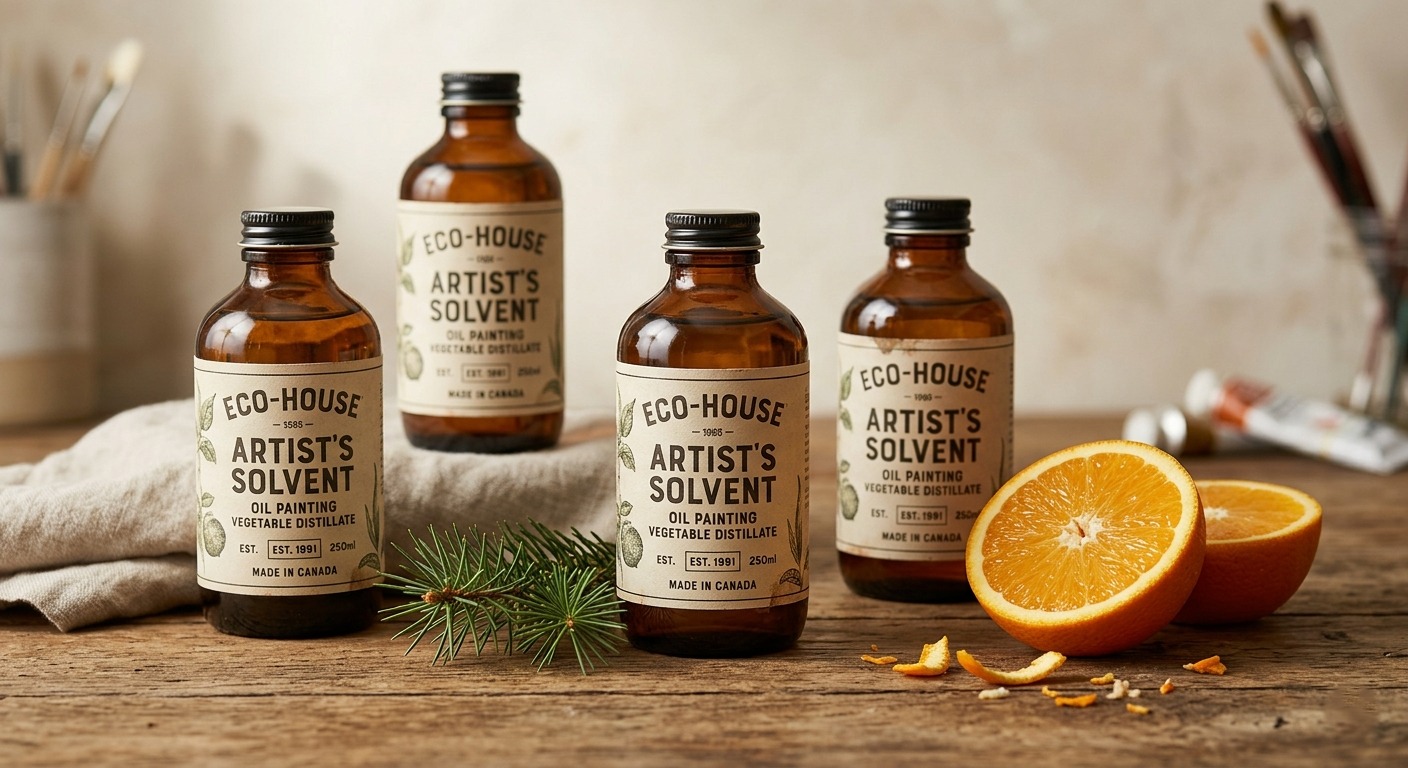
Citrus solvents take a different approach. The primary active ingredient is d-limonene, a terpene extracted from orange peel, often blended with cosmetic-grade or food-grade mineral oils and herbal essential oils. Eco-House, one of the most established names in this category, lists every ingredient on every product label, a standard the company explicitly compares to food industry labeling requirements.
That transparency is the actual differentiator, not the citrus origin alone. When a painter can read exactly what is inside the can, they can make an informed decision about exposure. When ingredients are petroleum-derived, variable in composition, and not fully disclosed, that informed decision is not possible.
There are honest tradeoffs worth naming. Citrus terpenes have a smell, a pleasant orange fragrance, but a real one. The strongest citrus solvents, those capable of substituting for turpentine in dissolving hardened damar or softening old wax, should be used only when a task genuinely demands that strength. Ventilation is still required. The idea that any solvent can be used freely in a closed space without consequence does not apply here any more than it does to turpentine.
What citrus solvents offer that petroleum alternatives do not is a known, stable, natural ingredient profile with centuries of documented behavior. They are petroleum-free and biodegradable. Their archival interaction with oil paint layers follows chemistry that painters and conservators understand well. There is no uncertainty about synthetic compounds of unknown long-term stability affecting the dried paint film over decades.
Practically, citrus thinners also dry more slowly than turpentine, which keeps paint workable longer on the palette during a session. For mid-session brush cleaning, they handle fresh oil paint efficiently. For final brush cleaning at the end of a session, a slightly stronger citrus cleaner works well. Only for dissolving resins or addressing heavily dried material is the full-strength version necessary.
Match the Solvent to the Task
The most practical framework for any oil painter is this: use the mildest solvent that accomplishes the job, ventilate regardless of what the label says, and know what is in what you are using.
Using a full-strength turpentine substitute to do a job a mild citrus thinner could handle is unnecessary exposure. The graduated approach applies to every solvent category: start mild, step up only when the task requires it, and treat all solvents as tools with a specific job rather than as interchangeable liquids.
This principle is not a sales pitch for any particular product. It is how professional painters and conservators approach material choice. The solvent that was already in the studio when you started painting is not automatically the right one, and the most expensive or most marketed option is not automatically the safest.
The Question Worth Asking
The question most painters have been trained to ask is: is this solvent safe? That question has no clean answer, because every solvent is a tradeoff and because “safe” depends entirely on quantity, frequency, ventilation, and individual sensitivity.
A more useful question is: do I know what I am breathing, am I using the minimum strength necessary for this task, and is the space I am working in properly ventilated?
Ingredient transparency makes the first part of that question answerable. The rest comes down to practice. Choosing solvents made from disclosed, natural ingredients does not eliminate all risk. It does give you the information you need to manage exposure honestly, which is more than most studio products have historically offered.
Eco-House products are available directly at eco-house.com and through Amazon, as well as through major art supply retailers including Blick Art Materials and Jerry’s Artarama.
If you’ve scrolled through any interior design feed in the past year, you’ve noticed it: sage green is everywhere. From […]
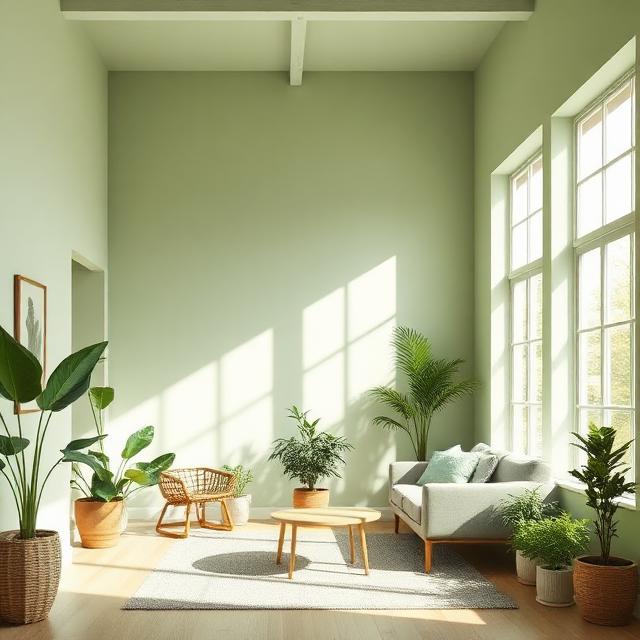
If you’ve scrolled through any interior design feed in the past year, you’ve noticed it: sage green is everywhere. From kitchen cabinets to bedroom walls, this muted, grey-green hue has become the defining color of the wellness-focused home. But its popularity isn’t just a trend — it’s rooted in something deeper.
Color psychologists have long associated green with calm, renewal, and connection to nature. Sage green, specifically, occupies a sweet spot: it’s warm enough to feel inviting but cool enough to feel sophisticated. Unlike bolder greens, it doesn’t compete with natural light — it amplifies it, creating spaces that feel simultaneously cozy and airy.
Interior designer Maya Patel, whose all-sage kitchen in her Brooklyn brownstone went viral last spring, explains the appeal: “Sage green is the color equivalent of a deep breath. In a world that feels increasingly chaotic, people are craving spaces that feel restorative. Sage delivers that without feeling clinical or cold.”
The rise of sage green also coincides with the broader shift toward eco-conscious living. Many homeowners choosing this color are also opting for zero-VOC paints, reclaimed wood, and natural textiles — creating a cohesive aesthetic that signals environmental awareness without being preachy about it.
Practically speaking, sage green is remarkably versatile. It pairs beautifully with warm woods like oak and walnut, plays well with brass and matte black hardware, and serves as a neutral backdrop for both bold art and minimalist spaces. It works in every room, from bathrooms to home offices.
For those considering the switch, designers recommend starting with a single accent wall or cabinetry rather than painting an entire room. This allows you to experience the color in different lighting conditions before committing fully. And when choosing your shade, lean slightly warmer — pure grey-greens can read as institutional under certain lighting.
Whether sage green endures as a long-term staple or eventually gives way to the next beloved hue, its current dominance says something meaningful about where we are as a culture: we’re tired, we’re overwhelmed, and we want our homes to feel like a gentle exhale. Sage green delivers exactly that.

Elena Torres doesn’t just paint walls — she transforms them into living, breathing ecosystems. Standing in front of her latest […]
Elena Torres doesn’t just paint walls — she transforms them into living, breathing ecosystems. Standing in front of her latest mural in downtown Portland, a 40-foot depiction of a Pacific Northwest old-growth forest, it’s easy to see why she’s become one of the most sought-after muralists in the country.
“Every pigment I use comes from the earth,” Torres explains, holding up a jar of deep ochre made from locally sourced clay. “When I paint a forest, I want the materials to honor the subject. It would feel wrong to celebrate nature using synthetic chemicals.”
Torres’s journey to plant-based pigments began during a residency in Oaxaca, Mexico, where she studied under traditional artisans who had been making natural dyes for generations. She learned to extract vivid blues from indigo, warm yellows from marigolds, and deep reds from cochineal — techniques that date back thousands of years.
What makes Torres’s work unique isn’t just her materials but her process. Before starting any mural, she spends weeks researching the local ecosystem. For her Portland piece, she catalogued over 60 native plant species, 15 bird species, and dozens of insects, incorporating each one into the design with scientific accuracy.
“Art has the power to make people see what they’ve been walking past every day,” she says. “If someone looks at my mural and then notices the actual Douglas fir across the street for the first time, I’ve done my job.”
Her upcoming project is her most ambitious yet: a series of interconnected murals across five buildings in Seattle’s Capitol Hill neighborhood, depicting the Puget Sound ecosystem from the ocean floor to the mountain peaks. The project, funded by a grant from the National Endowment for the Arts, will take over a year to complete.
Torres hopes the work will spark conversations about urban biodiversity and the ways cities can coexist with nature rather than displacing it. “We tend to think of nature as something that happens outside the city,” she reflects. “But nature is everywhere — even in the cracks in the sidewalk. We just need to pay attention.”
Artist Gallery
Artist Gallery
Creative styles, artistic process, and the spaces where inspiration meets sustainability.
Watch & Learn
Featured Videos
Tutorials, studio tours, and creative inspiration from artists and makers.
Tired of Strong Paint Thinner Fumes? There’s a Better Option
Eco-House
Still using harsh paint thinners? Strong fumes, headaches, and chemicals don’t have to be part of your creative process.
Oil Paint Drying Too Slow? Non-Toxic Fix.
Eco-House
Oil paint taking too long to dry? Eco-House CoZiCa™ Drier Blend #921 helps speed up oil paint drying without toxic fumes. Aromatic-free. Studio safe.
Eco-House 115 Extra Mild Citrus Thinner
Eco-House
Eco-House 115 Extra Mild Citrus Thinner is a safer, low-odor alternative to traditional paint thinners. Designed for artists, studios, and creative professionals .