There’s something deeply satisfying about finishing a piece of woodwork — watching the grain leap to life under a coat of oil, feeling the surface transform from rough lumber into something you can’t stop touching. But for decades, achieving that perfect finish meant exposing yourself to a chemistry set of toxic solvents, heavy-metal driers, and petroleum-based polyurethanes. The good news? Those days are over.
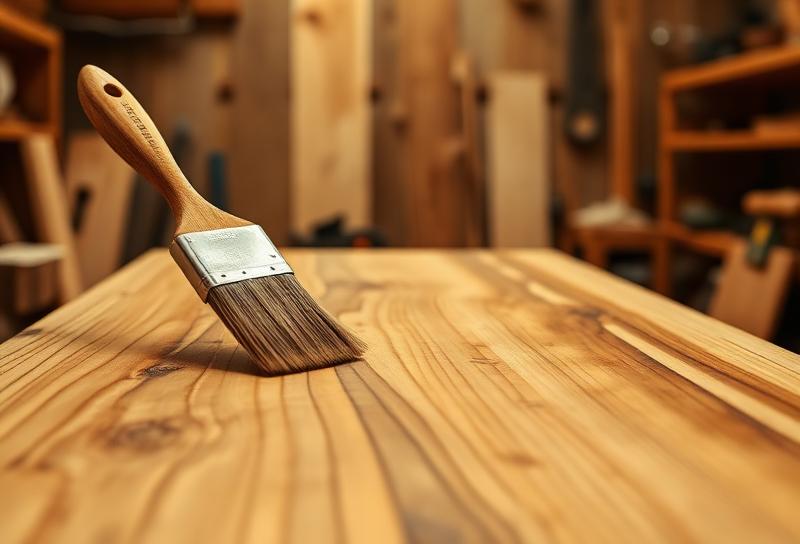
Natural oil finishes are the foundation of eco-friendly wood finishing. Pure tung oil and linseed oil have been used for centuries to protect and beautify wood, and for good reason: they penetrate deep into the grain, hardening from the inside out to create a durable, water-resistant finish that actually improves with age. Unlike surface-coating finishes like polyurethane, oil finishes allow the wood to breathe, reducing the risk of moisture-related problems like warping and cracking.
Eco-House’s Hard Oil Wax finish exemplifies the best of modern natural finishing. It combines plant-based oils with natural waxes to create a finish that’s both protective and beautiful — a subtle satin sheen that feels organic rather than plastic. Timber framers and floor finishers have been particularly enthusiastic about this product, as it holds up to heavy foot traffic while maintaining a natural, hand-rubbed appearance that synthetic finishes simply can’t replicate.
For those who want color, natural wood stains offer a compelling alternative to their synthetic counterparts. Made from plant-based dyes, mineral pigments, and natural oil carriers, these stains produce rich, transparent color that enhances rather than obscures the wood’s natural character. They’re also far more forgiving to apply than chemical stains — brush marks blend naturally, and overlapping wet edges don’t create the dark lines that plague synthetic products.
Water-based finishes have also come a long way. Early water-based polyurethanes were plagued by problems: poor adhesion, raised grain, milky appearance, and limited durability. Today’s best water-based finishes address all of these issues while offering the significant advantage of near-zero VOC emissions. They dry quickly, clean up with soap and water, and produce a clear, non-yellowing finish that’s ideal for light-colored woods like maple and birch.
One often-overlooked category is natural wax finishes. Beeswax and carnauba wax, applied over an oil base coat, create a luminous, hand-rubbed finish that has been prized by furniture makers for centuries. While wax alone doesn’t provide the durability needed for high-use surfaces, it excels on decorative pieces, carved details, and turned objects where you want the tactile warmth that only wax can provide.
The most important thing to understand about eco-friendly wood finishes is that ‘natural’ doesn’t mean ‘inferior.’ In many cases, natural finishes outperform their synthetic alternatives in real-world conditions. They age gracefully, they’re easy to repair and recoat without stripping, and they create finishes that look and feel authentically beautiful. Whether you’re a professional craftsperson or a weekend woodworker, switching to natural finishes is one of the simplest and most rewarding changes you can make — for your health, your work, and the planet.